
Rural families already make their own power. We add the wind.
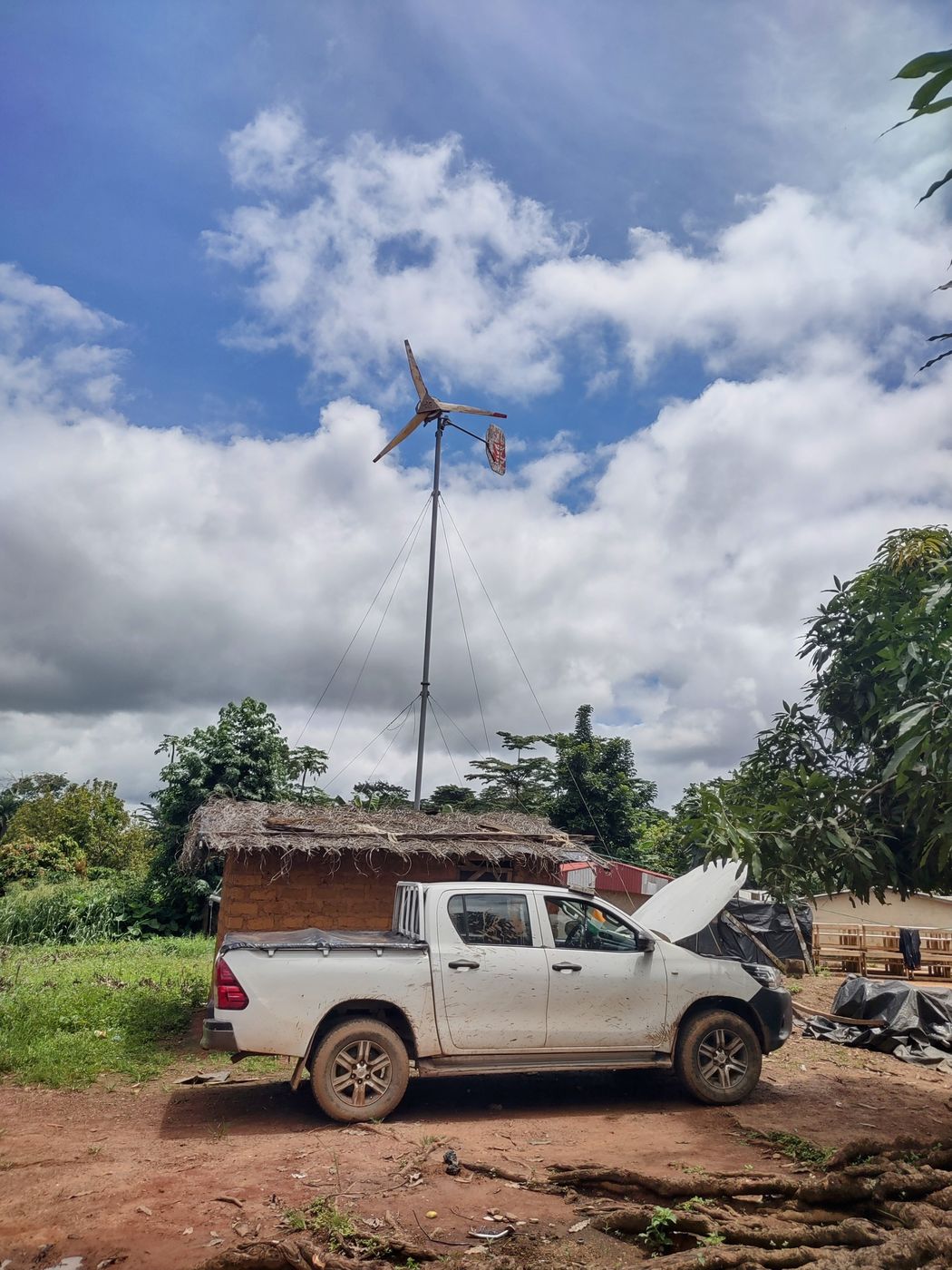
Without the grid, rural Ivorian families built their own coping strategy: a small solar panel and a battery. KOC Bridges to Peace accompanies it with small wind turbines made and repaired in the village, charging the batteries families already own.
Families already make their own power
Without the grid, rural Ivorian families built their own coping strategy: a small solar panel and a 12 V battery, paid for out of their own pockets. Together they run an invisible power plant that no statistic counts. But solar costs them more here than in East Africa, and too many of their batteries are fake.
- Families blame the panel, replace it every 6–12 months, and keep the fake battery.
- The risk: families lose faith in what renewables can do.
Let's meet in Antalya
Help us build healthier, common-sense pathways to affordable energy, with shared cold storage and community wind–solar hubs, designed by the communities who use them.
Join our session at the Côte d'Ivoire pavilion on Tuesday 10 November at 14:00 (programme being finalised), or ask us for a 20-minute meeting between 9 and 12 November.
Request a meeting →Three low-cost innovations
Wind for the battery they already own
We train villagers to build and repair small wind turbines that charge the same 12 V batteries families use with their panels: a second source when the sun is weak, with no new system to learn. In Téhini, a 1.5 kW turbine earns the village about 600 FCFA a day.
The battery scale test
A fake battery gives itself away on a scale: one sold as "285 Ah" weighs 10 kg, about 30 Ah of real capacity. We weigh and test batteries in homes and shops, a check any buyer or seller can learn. In October 2026 our surveyors weighed the batteries in 32 shops in Bounkani and Tonkpi: 11 of 38 solar- and car-size batteries weighed 3 to 50 times less than their label.
A wind map on telecom towers
Our proposal to the Ministry of Mines, Petroleum and Energy puts wind sensors on about 25 existing telecom towers, at a fraction of the cost of new masts, with the data owned by the State. It shows where village wind pays.
From individual to community
Almost every community we visit already has solar panels, but each household works alone. When a community shares a vision, it can pool what it already has and go further together: the 600,000 FCFA one family is quoted for a bigger system could instead power something the whole village uses.
The community wind–solar hub, a small mini-grid in one place, run by the community. Solar powers it by day; locally built wind turbines keep it running at night, when cold storage still needs power.
- Cold storage: a small fee to keep fish, produce or drinks cold
- Battery recharging inside the community, not in the next town
- Battery testing and advice before buying, by locally trained women and youth
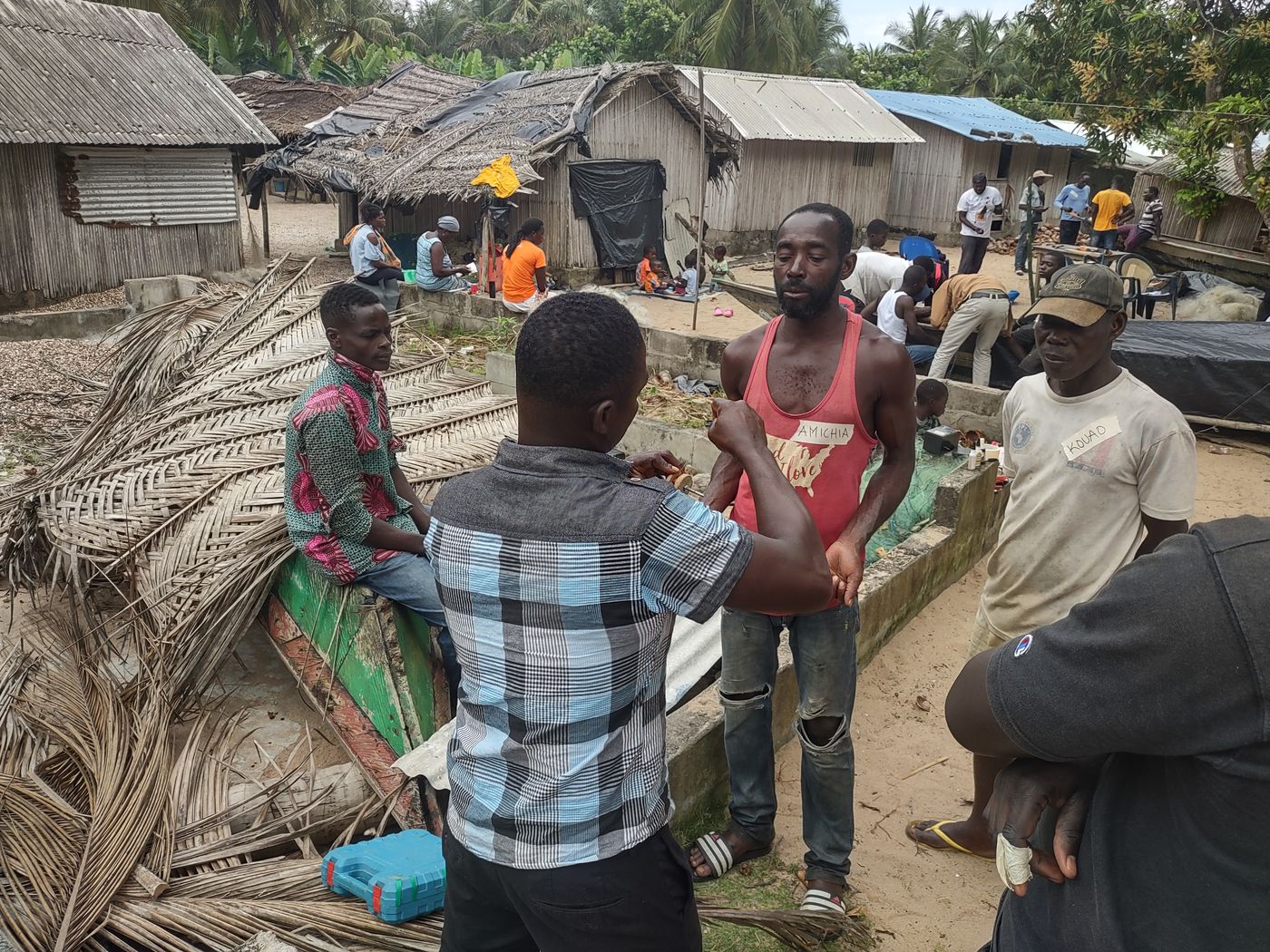
- A training workshop in a container or simple hangar, where people build turbines and learn to use their solar power well
Women and youth bring the ideas. As technicians, we show what is possible within them.
Built in Côte d'Ivoire, by the people who use it
- Training rural communities in small wind since 2016, with the LABTECH laboratory of Université Félix Houphouët-Boigny
- 50-50-50 campaign: 50 turbines for 50 villages in northern Côte d'Ivoire
- 2026 field research in 125 villages of Bounkani and Tchologo
- Phase two, October 2026: batteries weighed in 32 shops in Doropo, Téhini, Man and Sangouiné (Bounkani and Tonkpi); Tchologo next, then other regions with large rural populations
- Member of Wind Empowerment, the international small wind network
Our rule: small wins that are cheap, affordable and local.
What you can do with us
In the spirit of the PND 2026-2030 and in support of Mission 300.