Atelier éolienne · Abidjan, 28–29 novembre · 30 places · Inscription →
KOC Bridges to Peace Energy Access Programme
Field Guide · Renewable Energy
A Field Guide · Renewable Energy

How to Build a
Low-Cost Wind Turbine

A step-by-step manual for constructing functional wind turbines using accessible materials — field-tested across off-grid communities in rural Africa.

Built for builders, not engineers with offices.

🛠️

Locally Sourced Materials

Every component can be sourced in rural markets across Sub-Saharan Africa — no specialist suppliers needed.

📐

Step-by-Step Instructions

Clear diagrams and written instructions designed for community builders, not engineering graduates.

🌍

Field-Tested

Developed and refined across real installations in off-grid communities in rural Africa.

⚡

Functional Output

Turbines built with this guide generate meaningful electricity for homes, schools, and small enterprises.

From the field

Built by the people who use them

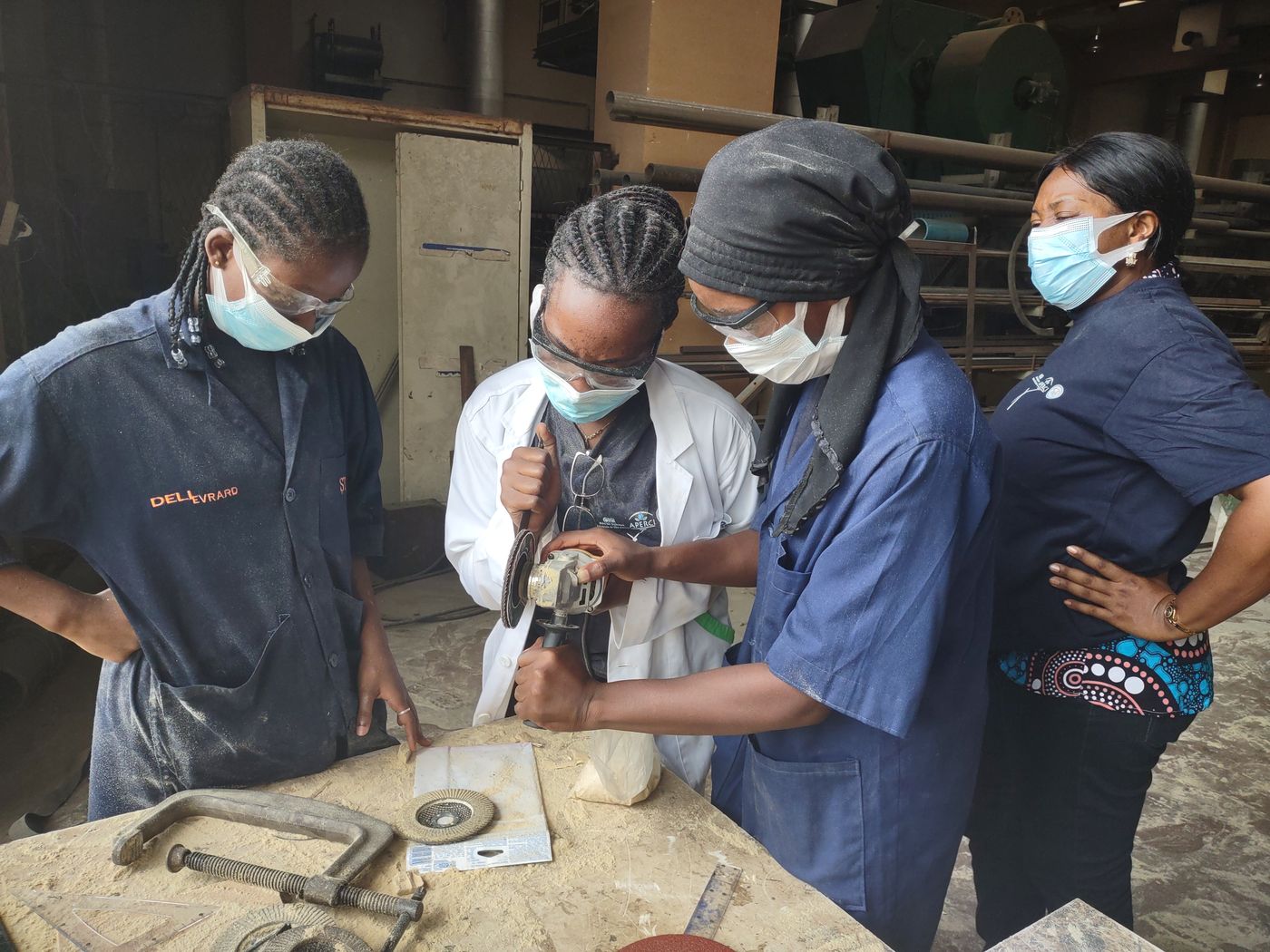
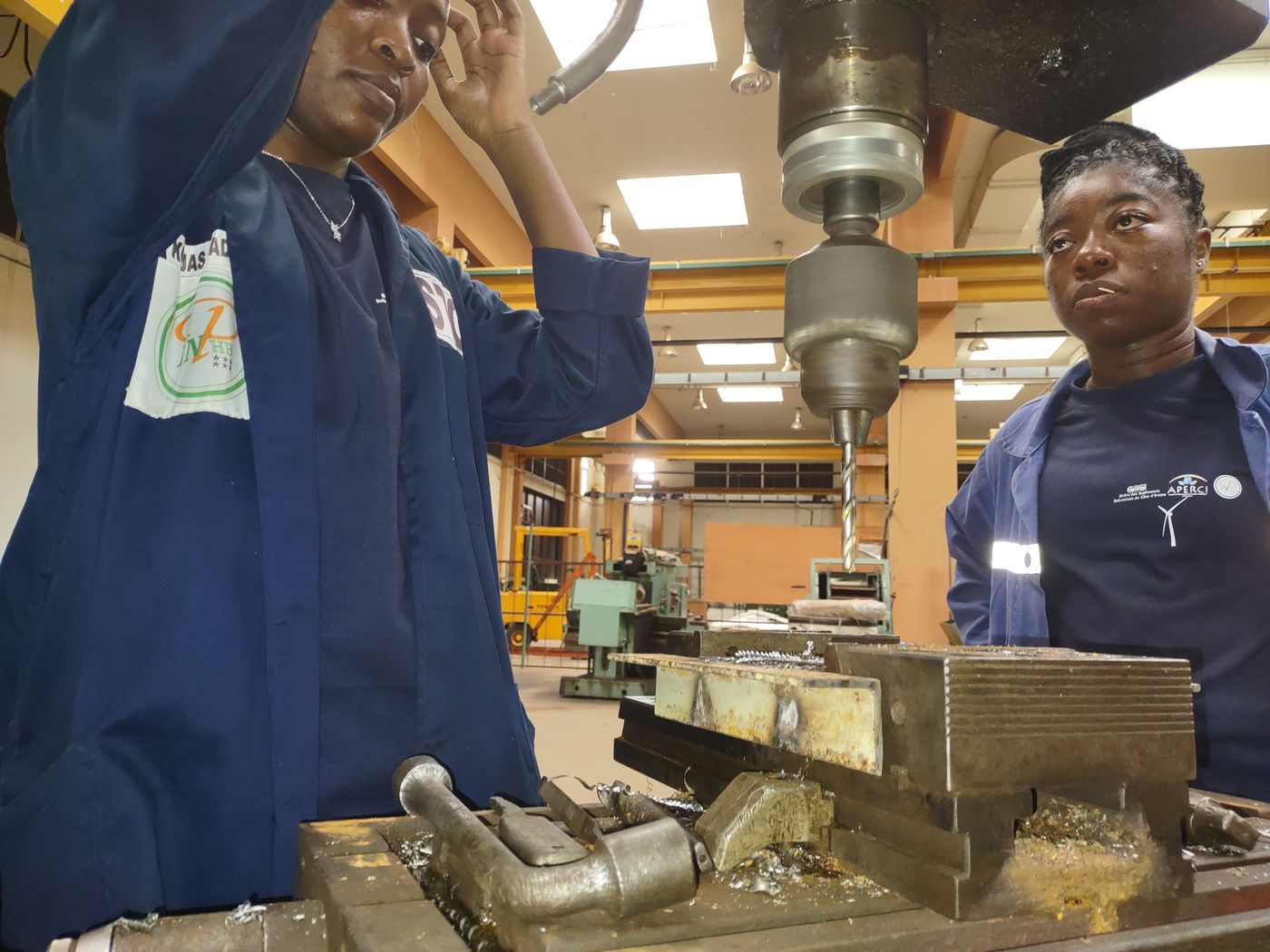
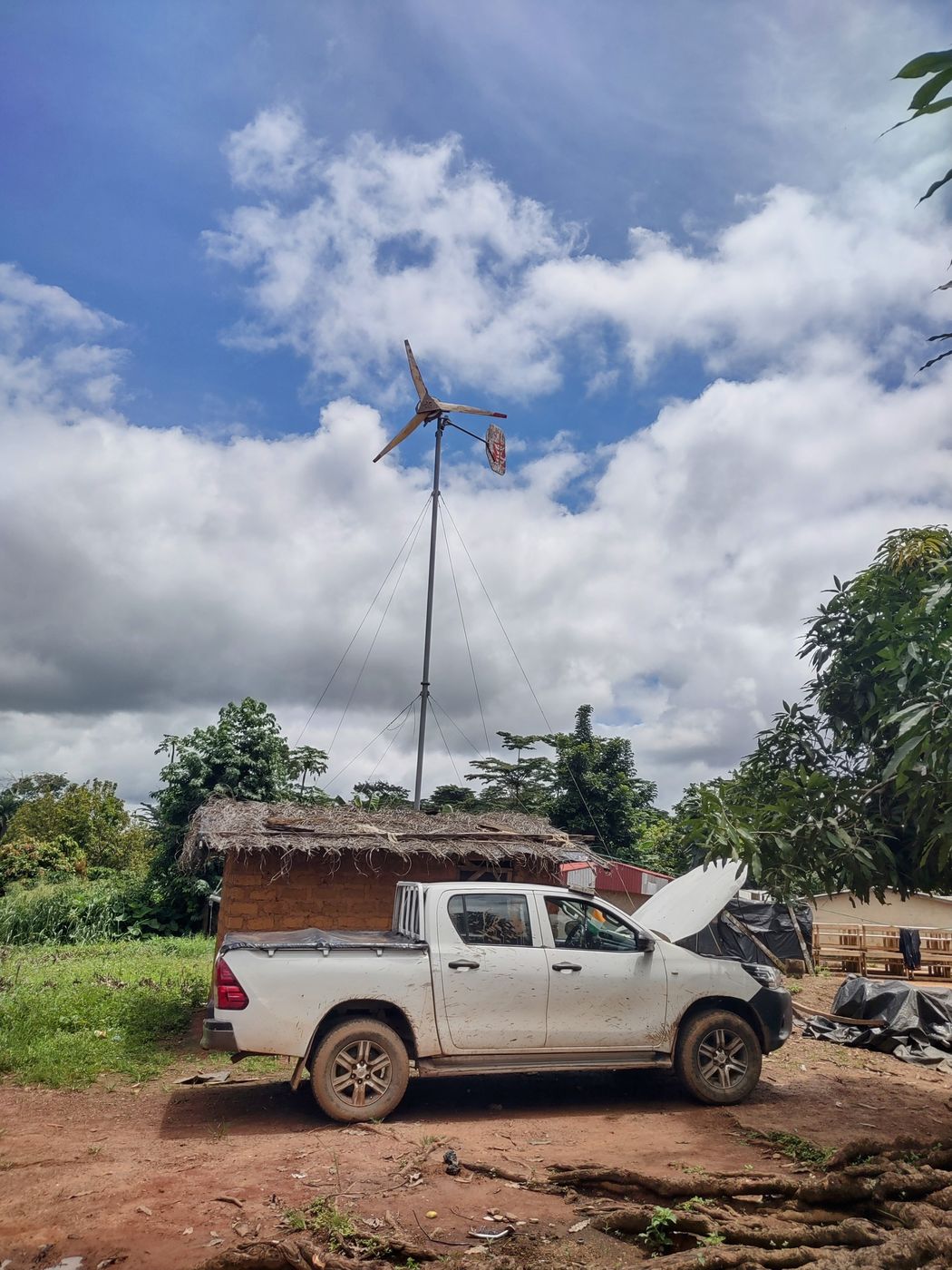
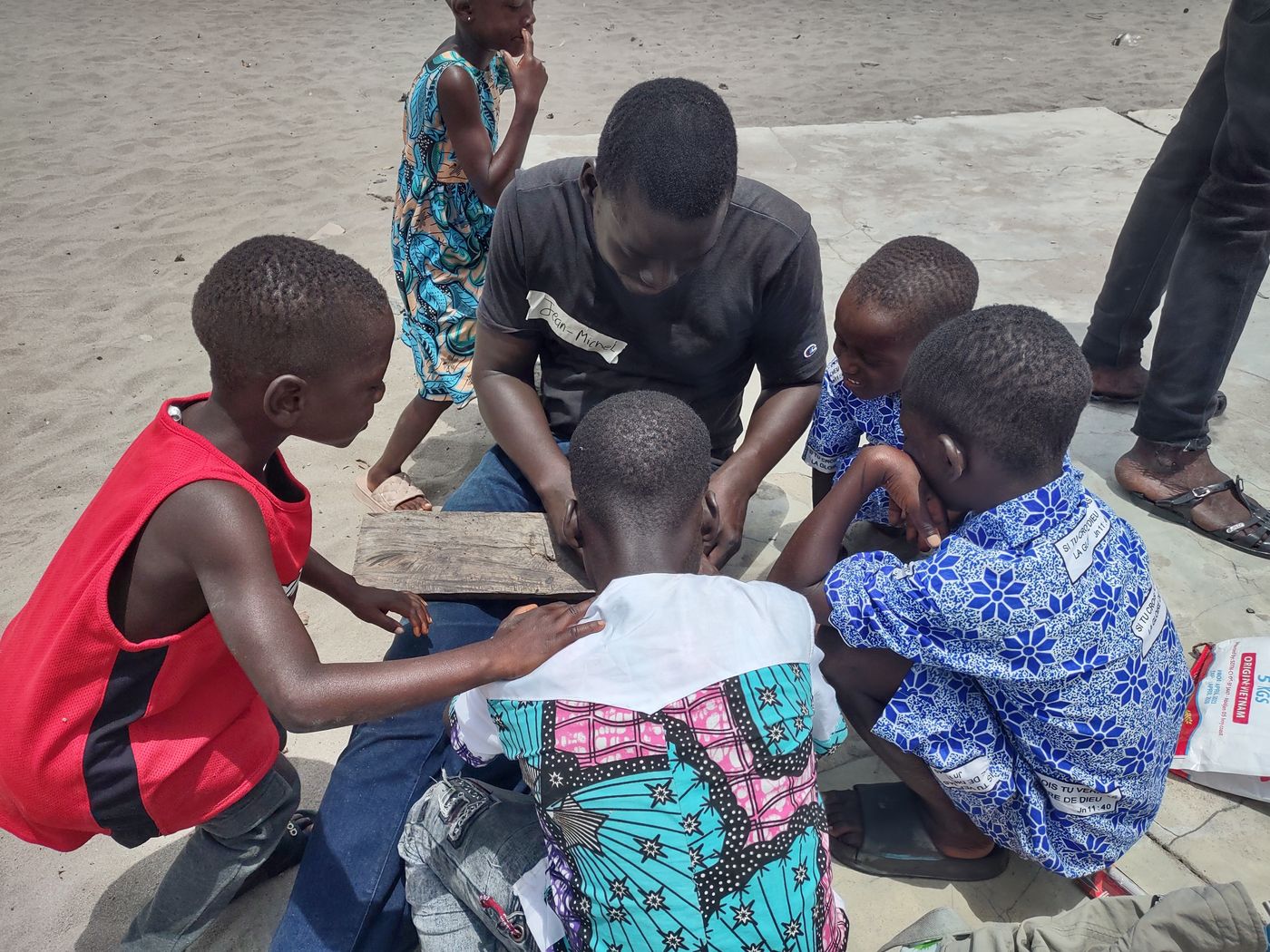
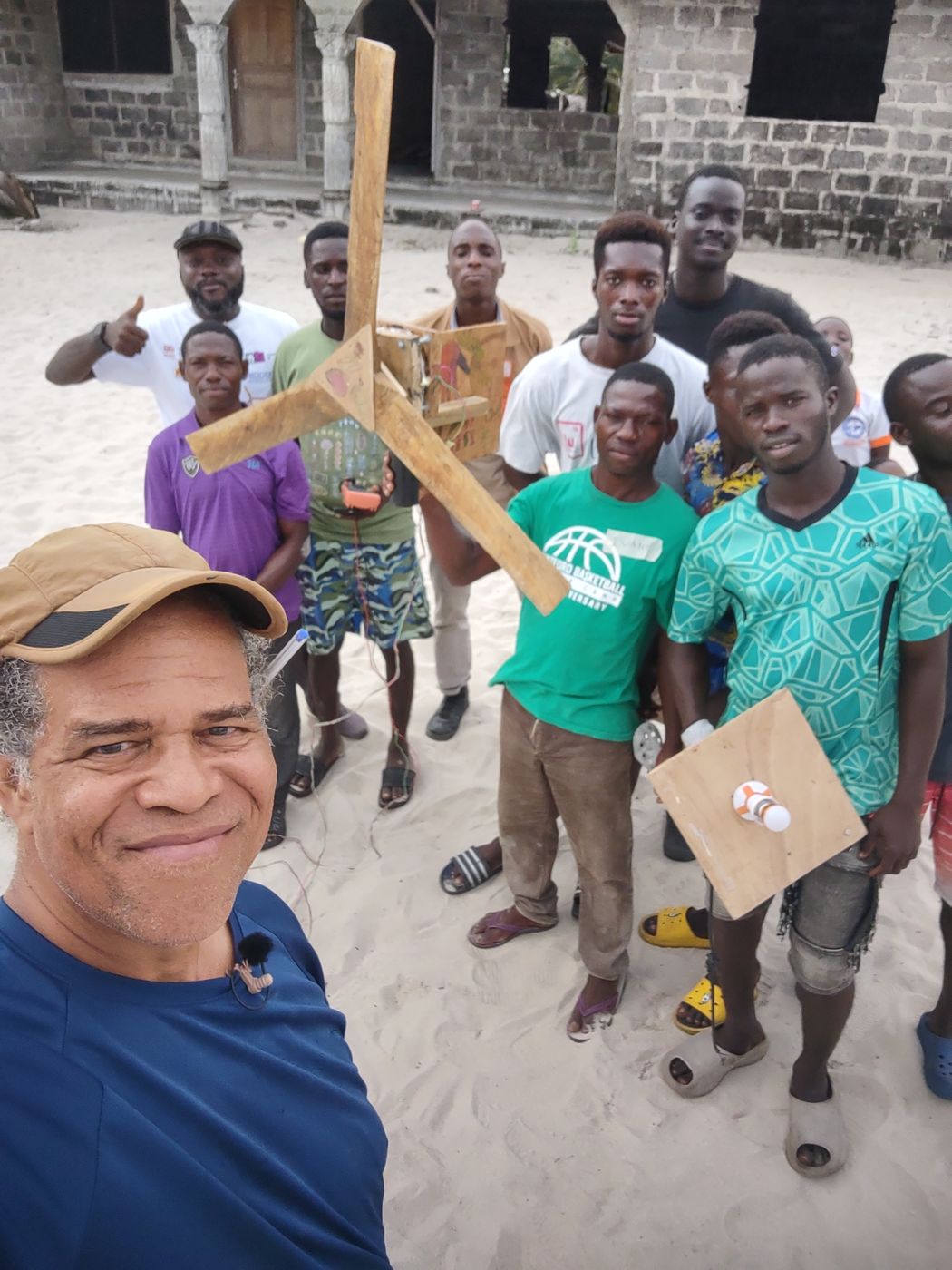
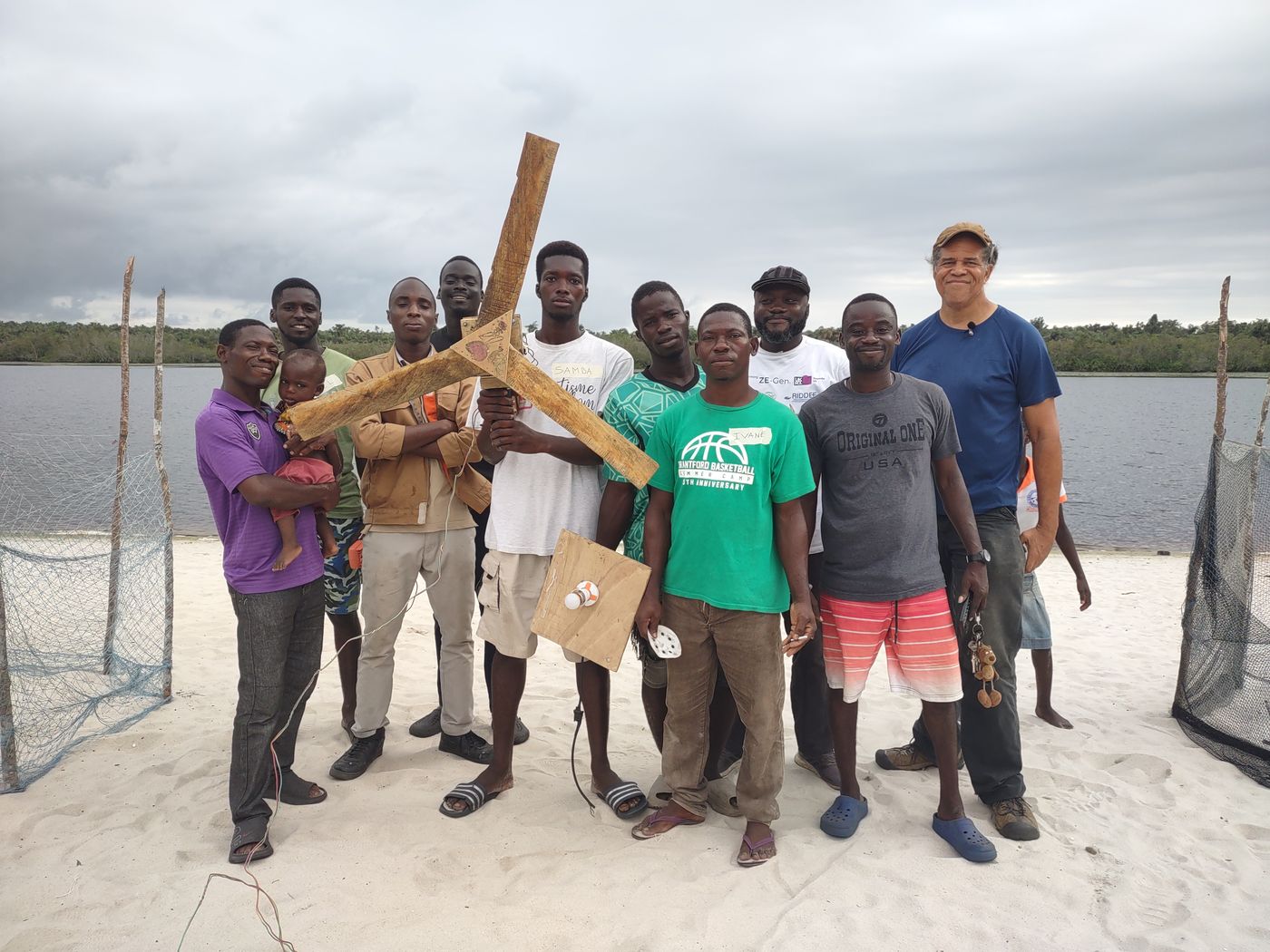
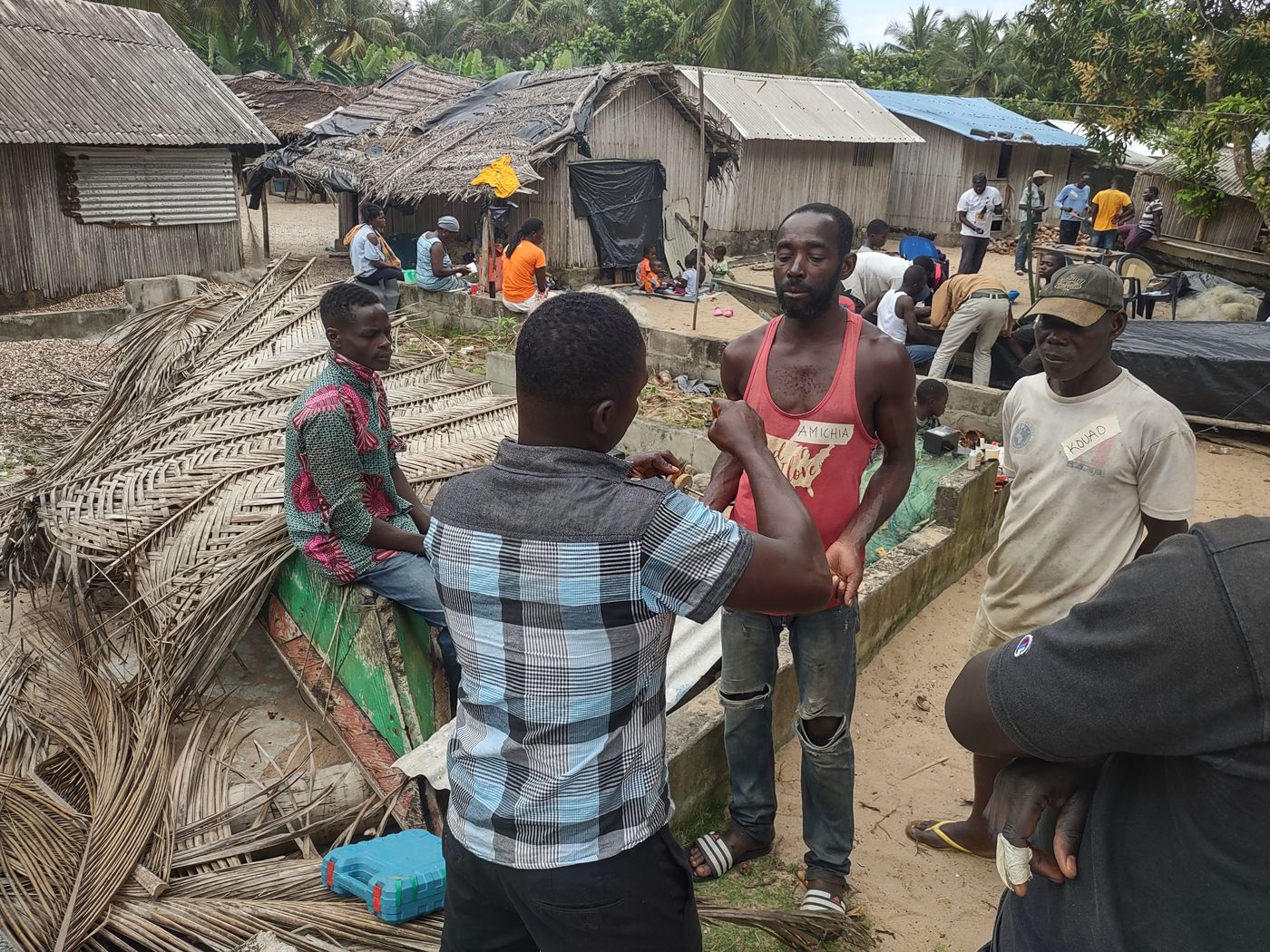
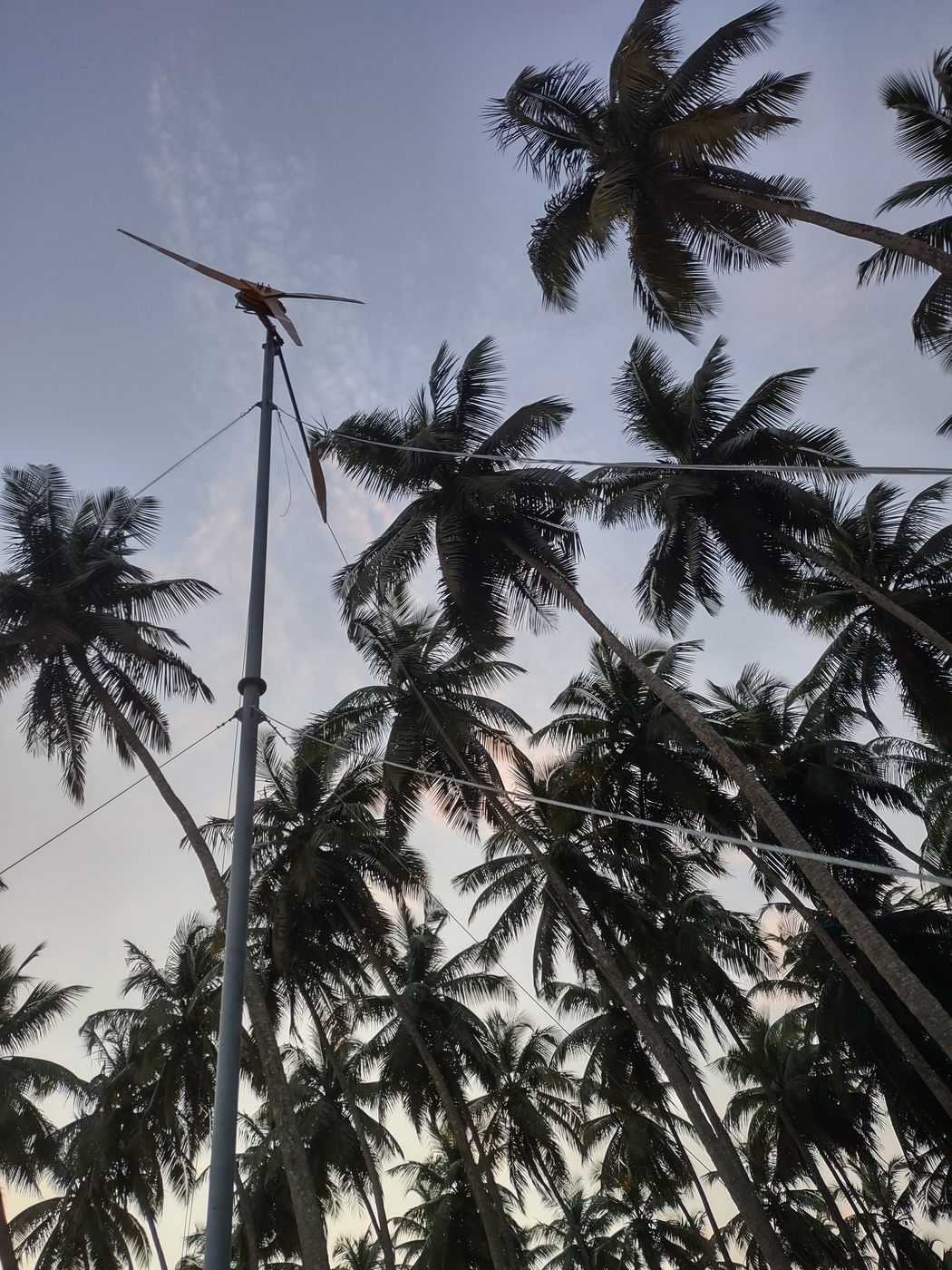
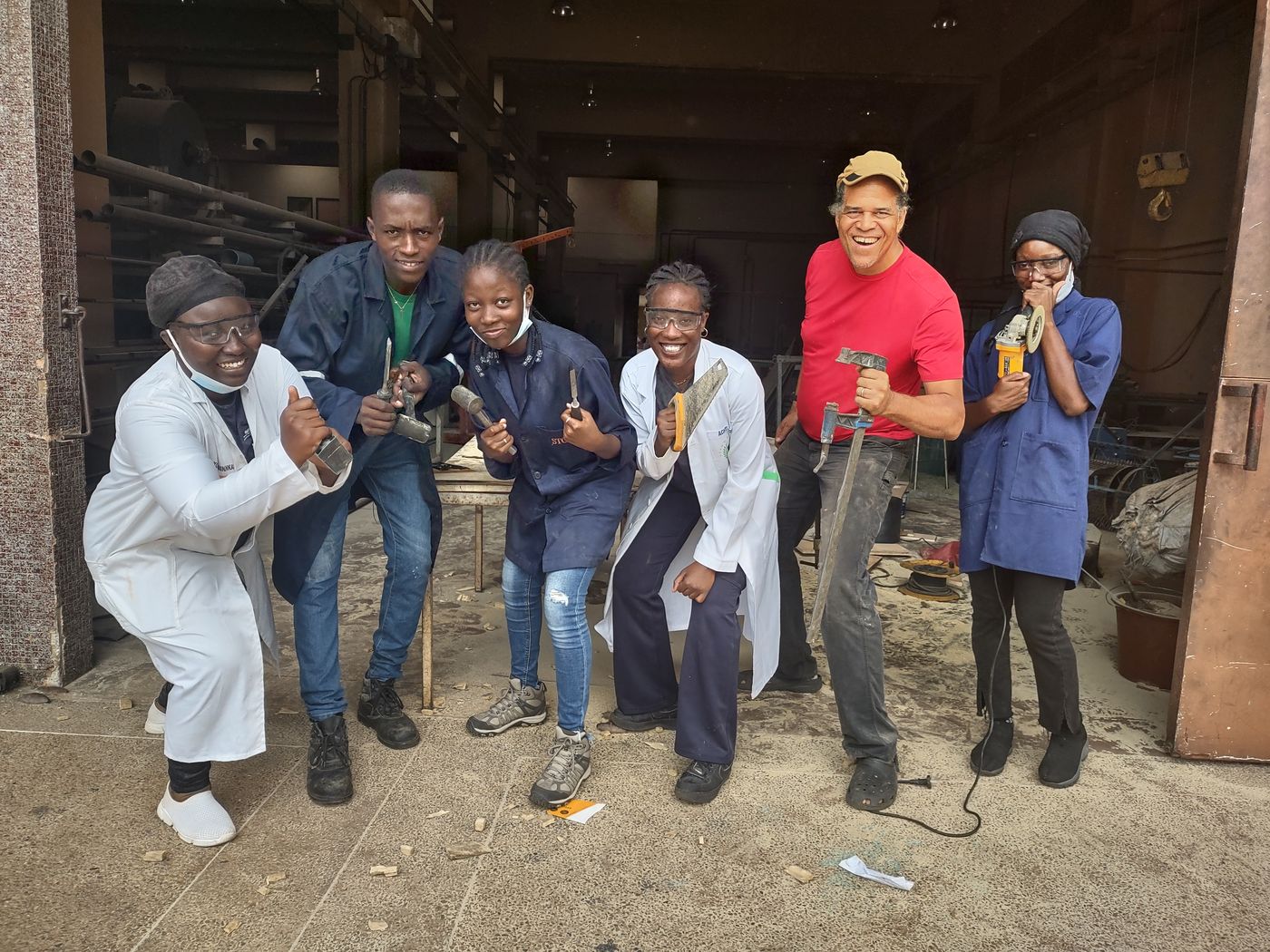
Trainees in the workshop, young builders with their first blades, and finished turbines turning above villages.
From the guide

Inside the 50-50-50 turbine

A small axial-flux turbine designed to be built in a village workshop from wood, scrap steel and recycled magnets, and repaired with the same tools.

Blades

  • 5 hardwood blades, 1.2 m rotor diameter
  • Designed for a tip-speed ratio of about 4.5
  • Sanded and sealed with polyurethane; balanced to within 5 g

Alternator

  • Three-phase axial flux, 12 hand-wound copper coils (0.75 mm wire)
  • Recycled magnets on steel rotor discs
  • Starts charging at about 150 rpm, a wind of roughly 3.7–3.9 m/s

Tower

  • 6 m tilting steel mast, about 110 mm diameter
  • 3–4 stainless-steel guy cables with turnbuckles
  • Hinged base, so it can be lowered for maintenance

Electrics in development

  • Designed around a 24 V battery bank and a three-phase rectifier
  • Dump load to protect the batteries in strong winds
  • 12 V outputs for phones, lights and small appliances

The alternator follows the open axial-flux approach popularised by Hugh Piggott, adapted to materials available in Côte d'Ivoire.

Pages from the build plans

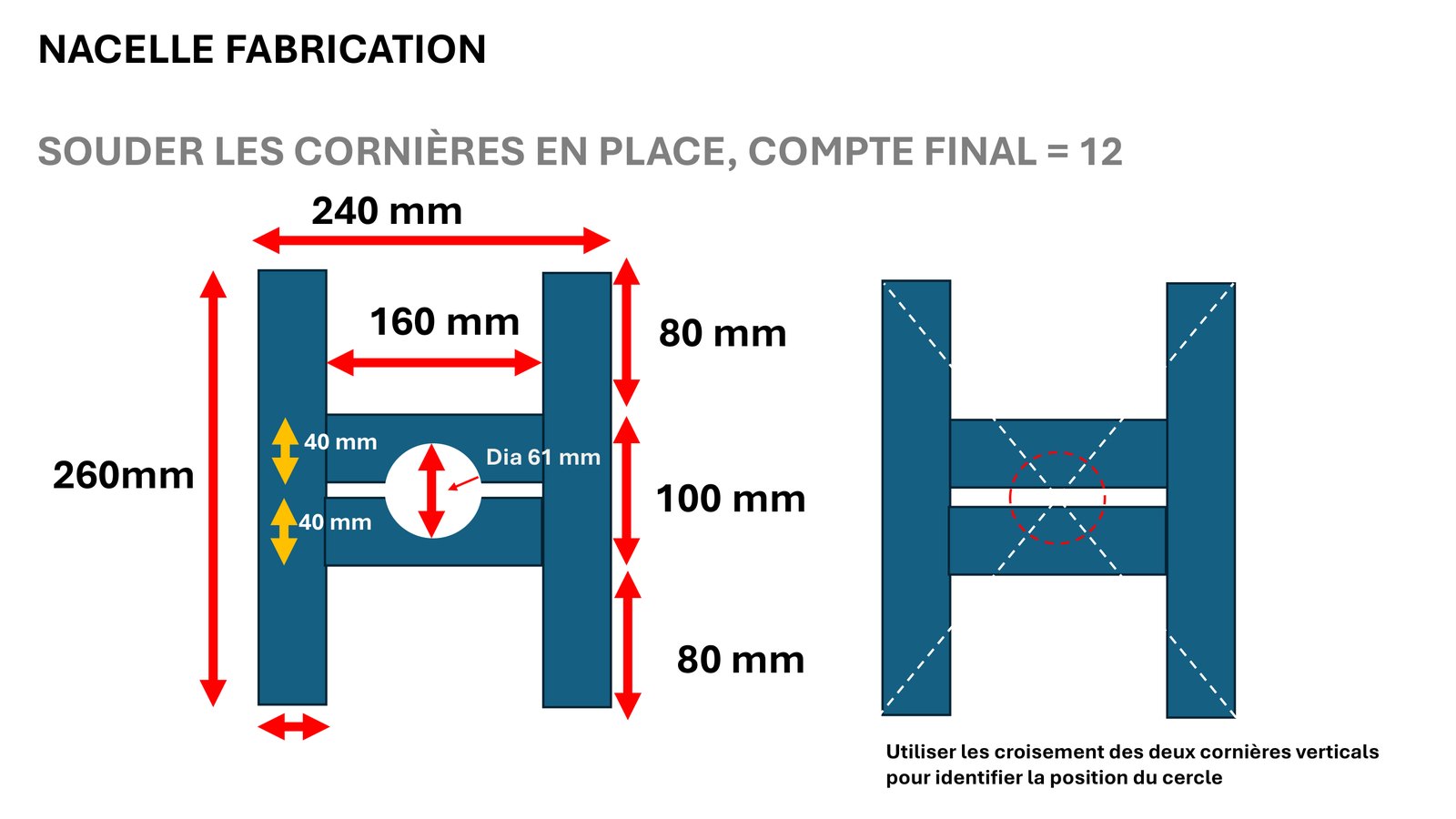
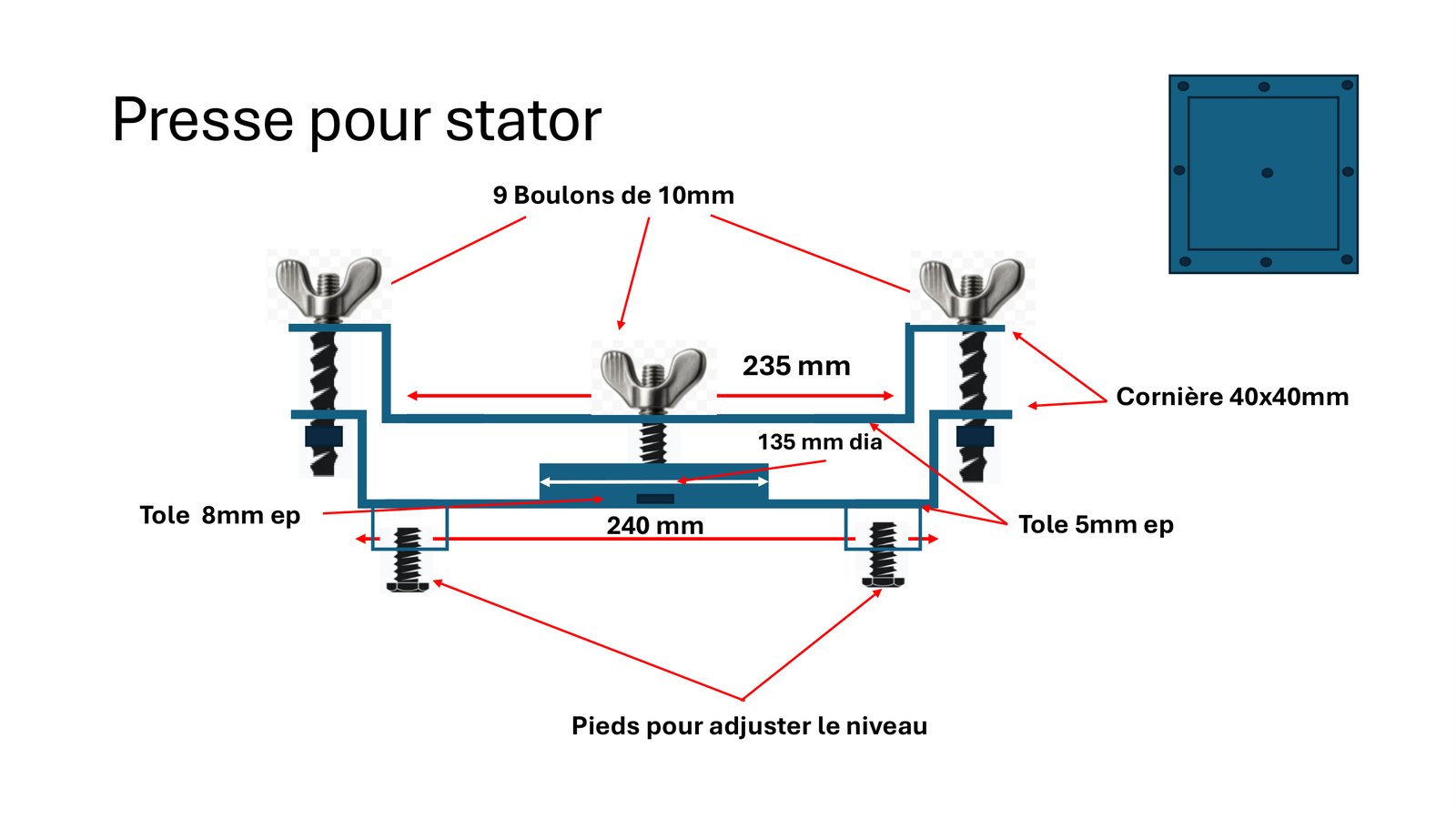
Every part is drawn with its dimensions and the number to cut for a batch of twelve turbines. The plans are in French, the working language of our workshops.
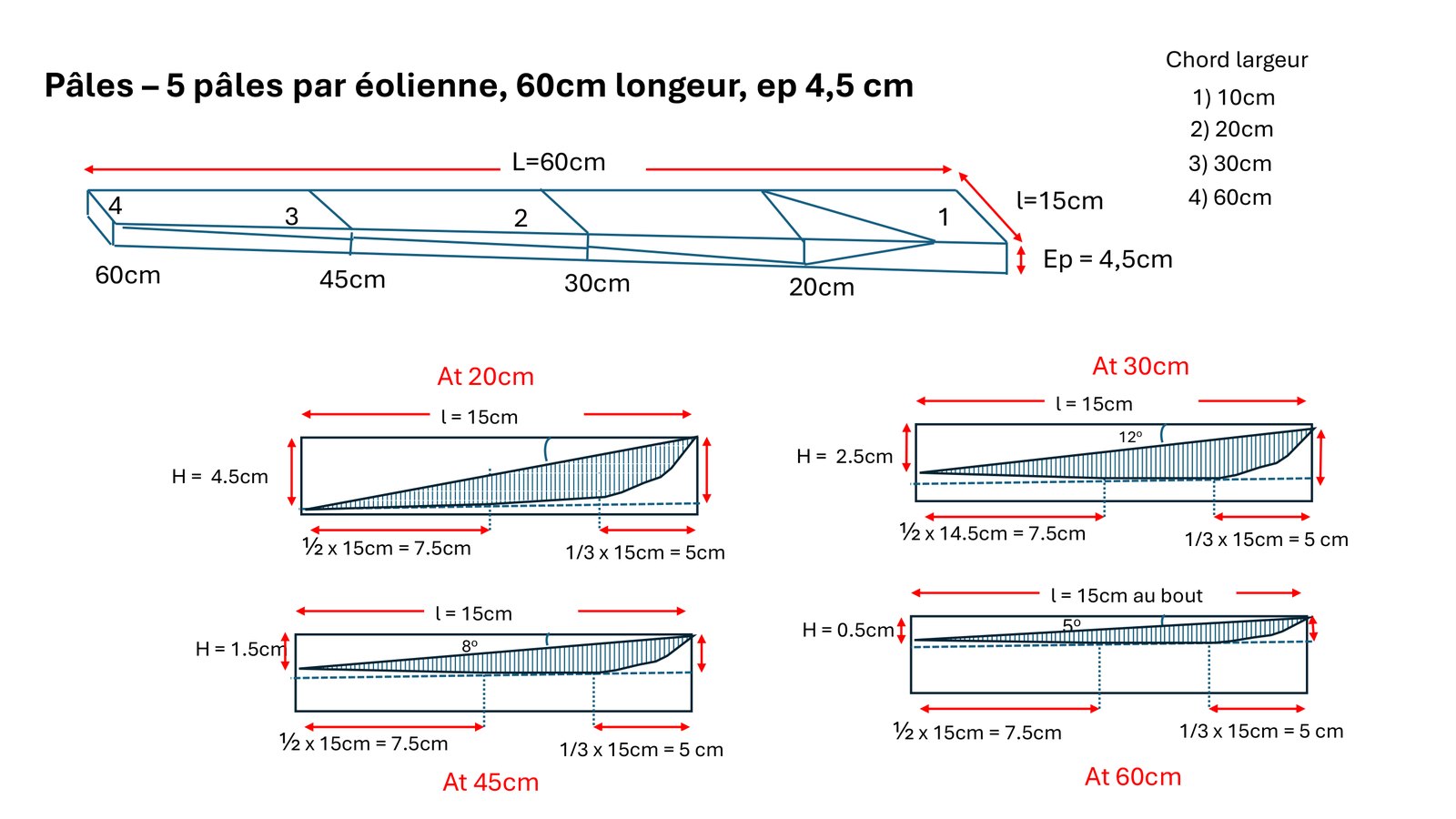
Plan page: five wooden blades, 60 cm long, with the carving profile at 20, 30, 45 and 60 cm
Blades: length, thickness and carving profile at each station.
Plan page: exploded drawing of the press used to cast the stator in resin
Stator press: the jig that casts the coils in resin.
Plan page: welding layout of the nacelle frame with dimensions
Nacelle: welding layout of the frame.
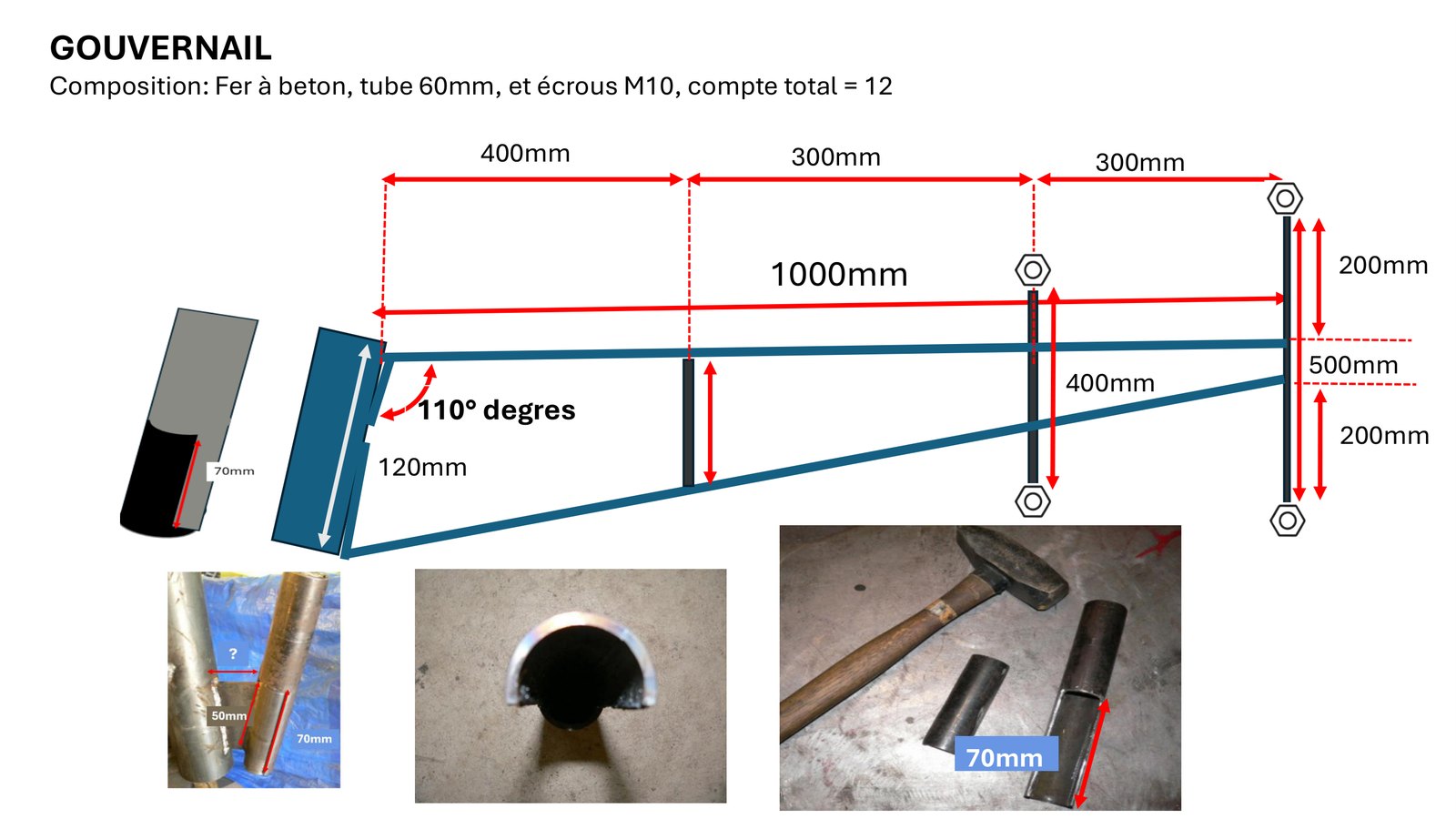
Plan page: tail vane dimensions with workshop photos of the hinge
Tail: dimensions and the hinge that turns the turbine out of storms.
From the guide

From village selection to maintenance

A turbine only lasts if the community is ready to own it. That is why the guide starts long before the first blade is carved.

  1. Village survey

    Wind potential, energy needs, social cohesion and willingness to co-manage a shared asset.

  2. Local committee

    Each village forms a committee to mobilise residents and identify a site.

  3. Selection jury

    Project staff, technical advisers and community representatives choose the most prepared villages.

  4. Build workshops

    Women, young people and local artisans build the turbine by hand from local and recycled materials.

  5. Installation

    The community raises the tower and commissions the turbine itself.

  6. Maintenance every six months

    A checklist covers the mast and guy wires, bolts and air gap, coils and resin, magnets and blade balance.

We are also building tomorrow's energy workforce.
Learn about our upcoming Harmattan Heroes programme — a national STEM wind energy competition for students across Côte d'Ivoire, launching early 2027 — and find out how you can support the work in the field.

See Our Work & Support Us →

Get Early Access

Be among the first to receive the complete field guide when it launches. We will notify you as soon as it is ready.

No spam. Just one email when the guide is ready.